


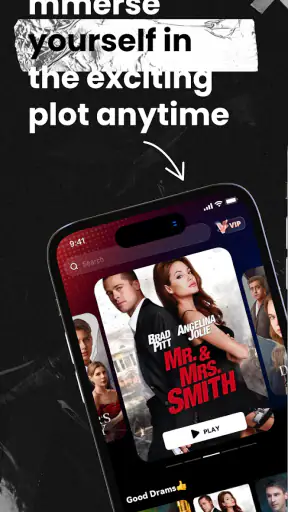
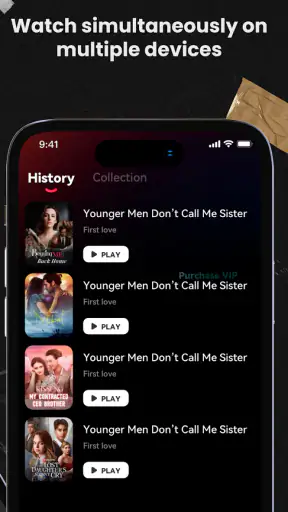
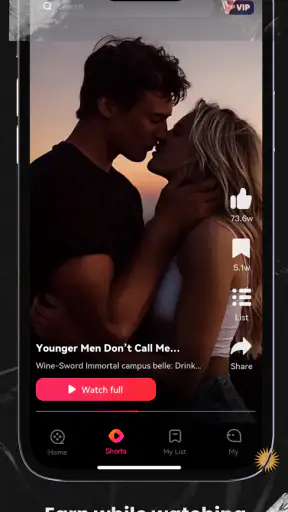
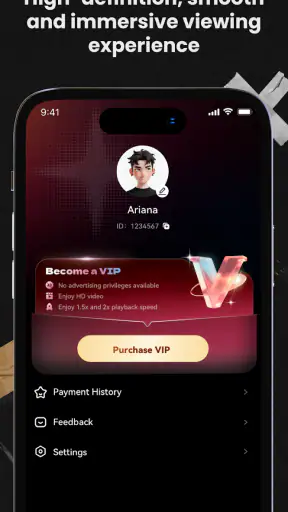
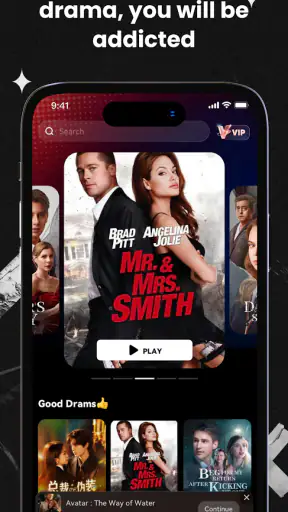
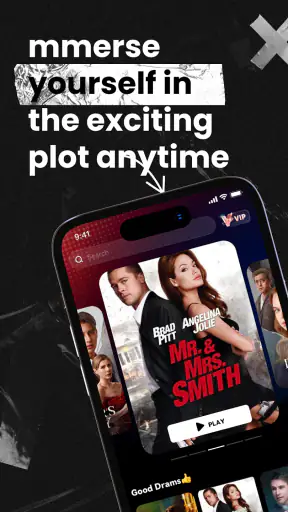
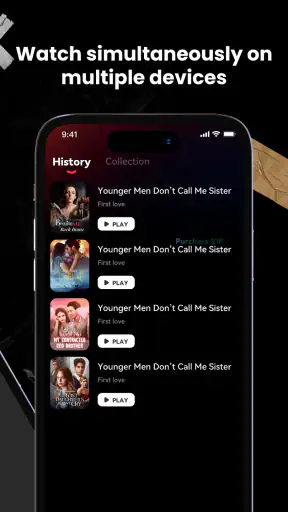

I spent time with DramaOL as an entertainment app built around short-form drama viewing. Its central promise is straightforward: you can watch its episodes without paying upfront, while the app also offers optional in-app purchases. That combination makes the important question less about whether it is free to install and more about how well the free viewing experience fits the way you watch stories.
My first impression is that DramaOL is aimed at people who like quick, emotionally direct episodes rather than long films or traditional television schedules. It is easy to imagine opening it during a commute, while waiting for an appointment, or at the end of the day when I want a small burst of drama instead of committing to a full-length show. The app sits firmly in the entertainment category, and the Everyone content rating makes it approachable for a broad audience.
The app comes from developer fredom lemedy and has reached more than a million installs. Its average rating is 4.8 from roughly 37 thousand ratings, which suggests that many people find the basic experience appealing. I would not treat that number as a guarantee that every viewer will enjoy it, though. Short drama apps can be very personal: one person may love the rapid cliffhangers, while another may find the pacing too compressed.
How DramaOL feels to use and where its value comes from
Free access is the clearest part of the offer
DramaOL is free to download, and its main attraction is the ability to watch episodes without an entry fee. That matters because it lets me test the app before deciding whether it deserves a regular place on my phone. I do not have to subscribe simply to discover whether the storytelling style suits me, and that lowers the risk for casual viewers.
The purchase model still deserves attention. Optional items are listed from $7.99 to $29.99 each, so the app should not be judged as though every part of the experience is permanently free. The useful distinction is this: free access gives you a chance to explore, while paid items may become relevant if you want a faster or more complete route through the content. I would avoid buying anything on the first session. I would first watch enough free material to understand how much value I am actually receiving.
That approach is especially sensible for viewers who tend to start several dramas and finish only one. A free starting point lets you compare the tone, episode length and storytelling rhythm without turning curiosity into an immediate expense. On the other hand, someone who already knows they enjoy this style may see more reason to pay for convenience once the free portion has earned their interest.
The viewing experience suits small pockets of time
The strongest practical use case is fragmented viewing. I can picture opening DramaOL for a few minutes while having coffee, watching an episode during a lunch break, then returning later when I have another short window. This is different from a conventional streaming service, where I often need to remember where I stopped in a longer episode or reserve a larger block of time.
Short drama viewing also works well when I want momentum. Episodes designed around quick developments can make it easy to continue after one more scene. That is both a strength and a weakness. The app can keep a story moving when I am tired or distracted, but the same rapid rhythm may leave less room for quiet character development than I would expect from a full television drama.
My practical tip is to decide in advance how many episodes I want to watch in one sitting. Without that boundary, cliffhangers can turn a short break into a much longer session. This is not a complaint unique to DramaOL; it is part of the format, but the app’s free availability makes it particularly easy to dip in repeatedly throughout the day.
What the rating and age label tell me
The Everyone rating makes DramaOL a relatively easy recommendation for households looking for broadly accessible entertainment. I would still use personal judgment when choosing what to watch, because an age label is not the same thing as a detailed description of every story theme. Parents who want strict control over the tone of everything viewed should look through the available content themselves rather than relying on the label alone.
The high average rating and large audience indicate strong general approval, but they do not answer the questions that matter most to an individual viewer. A person who loves fast romantic tension may respond very differently from someone searching for slow, carefully developed drama. I see the rating as encouragement to try the app, not as proof that it will replace every other entertainment option.
Small habits that make the app easier to judge
I would evaluate DramaOL in three stages. First, I would sample several free episodes from one story rather than judging the entire service after a single opening scene. Second, I would check whether I am enjoying the episodes themselves or merely following cliffhangers. Third, I would ask whether the free route feels satisfying enough before considering an optional purchase.
That third step is important because paid convenience is only useful when the underlying content already works for me. If I am watching only to reach the next reveal, paying may make the process quicker without making the drama better. If I am genuinely invested in the characters and want to continue immediately, the purchase option may feel more reasonable. This is a personal value judgment, not something the app can decide for me.
I would also use a stable routine rather than treating the app as my only source of entertainment. DramaOL is well suited to brief viewing sessions, but it is less obviously suited to someone who wants a broad library of long-form films, documentaries or conventional television series. A general streaming service remains the better choice for that wider purpose.
How it compares with familiar alternatives
Compared with a traditional streaming app, DramaOL feels more focused on immediate, bite-sized drama. A conventional service may offer more variety and longer productions, but it can require more browsing before I find something worth watching. DramaOL’s appeal is the narrower, quicker experience: open the app, choose a story and get into the action with less commitment.
Compared with free video platforms, the difference is likely to be structure rather than simply cost. Free video platforms can provide enormous variety, but that variety can also make the viewing experience scattered. DramaOL is more useful when I want entertainment organized around continuing drama instead of random clips. The trade-off is that a general platform may offer more kinds of content and more familiar ways to discover creators.
Compared with paid subscription services, the free starting point is DramaOL’s strongest financial advantage. I can try it without adding another recurring bill. The trade-off is that optional purchases may matter more once I become invested in a particular story. I would therefore compare the total amount I expect to spend with the convenience and enjoyment I receive, rather than assuming a free download automatically means the lowest long-term cost.
Where the trade-offs become noticeable
The first limitation is the possibility of uneven value between free viewing and paid progression. The app clearly offers a free way to watch, but viewers should pay attention to how much of their preferred experience remains comfortable without purchasing optional items. I would not make a decision based only on the word “free”; I would judge whether the free route gives me enough story to enjoy the app on its own.
The second limitation is format fatigue. Rapid drama is compelling in short bursts, yet the same pattern can become tiring if every episode pushes immediately toward another hook. Viewers who prefer subtle dialogue, patient world-building or long cinematic scenes may feel that DramaOL moves too quickly. For those users, a conventional television or film app would probably deliver better value even if it costs more.
The third trade-off concerns spending discipline. The listed purchase range is substantial enough that I would treat optional items as deliberate entertainment spending, not as a minor afterthought. My rule would be simple: never buy because I feel pressured by a cliffhanger, and never purchase until I know I will continue watching that story. This keeps the free trial useful and separates genuine enjoyment from impulse.
Who is most likely to get good value
DramaOL is a strong candidate for viewers who enjoy serialized drama in short sessions, want to try content before paying and do not need one app to cover every entertainment genre. It also suits people who often watch on the go and prefer stories that can be resumed in small pieces. The free entry point makes it easy to test without rearranging an existing subscription budget.
I would especially recommend it to someone who says, “I only have a few minutes, but I still want a story.” That is where the app’s format makes practical sense. It can fill the gap between social media scrolling and a full episode of a conventional show, giving that spare time a clearer narrative shape.
I would be more cautious about recommending it to viewers who dislike cliffhangers, want a large catalog of unrelated genres or prefer to pay one predictable subscription for everything. It may also be a poor fit for anyone who tends to spend impulsively when a story locks new progress behind an optional purchase. In those cases, a service with a clearly defined catalog and payment structure may be easier to manage.
Device support and the current release
The current version is 1.0.6, and the app supports Android 7.0 and later. That gives it a reasonably broad reach among Android users, including people who are not using the newest phone. Before installing, I would still make sure the device has enough free storage and that the operating system meets the requirement, especially if the phone is older.
Because this is an entertainment app, the quality of the experience will depend heavily on how comfortably I can watch for several minutes at a time. A small screen is workable for short episodes, but viewers who want a living-room experience may prefer a service designed around larger-screen viewing. DramaOL makes the most sense to me as a personal mobile companion rather than as a complete replacement for every screen in the home.
The app’s release date is June 30, 2026, so I would keep an eye on how future updates affect the balance between free viewing and optional purchases. The current version is the one I would assess today, but entertainment apps can change their catalogs and viewing flow over time. That is another reason to revisit the cost before making any purchase rather than assuming the first session will represent the entire long-term experience.
My way of deciding whether to spend
I would make the decision in this order: install it, watch free episodes, identify whether I am following the characters rather than only chasing the next reveal, and then consider the purchase range. If I am still enjoying the story after taking a break and returning later, that is a better sign than simply watching continuously in a burst of curiosity.
I would also set a personal limit before buying. Since individual items can cost between $7.99 and $29.99, I would decide what amount feels reasonable for one story and stop there. The app may deliver excellent entertainment value for one viewer and poor value for another, depending on how much free content is satisfying and how often optional purchases become tempting.
For a friend, my recommendation would be conditional but positive: try DramaOL if quick serialized drama sounds appealing, and use the free access as a genuine test rather than a sales funnel to rush through. The app has a clear place in the entertainment category, especially for spare moments and mobile viewing. Its main weakness is not the idea itself, but the uncertainty of whether the free path will remain satisfying once I become invested.
The final verdict for different kinds of viewers
My overall view is that DramaOL offers a convenient way to sample short drama without paying at installation. Its large audience and 4.8 average rating support giving it a fair trial, while the Everyone label makes it approachable for general users. I like the low-risk starting point and the way the format fits short breaks.
I would skip it if I want a broad, predictable subscription library, long-form productions or a completely fixed entertainment budget with no optional purchase decisions. I would also skip it if cliffhanger-driven storytelling usually frustrates me. In those situations, the usual streaming alternatives are likely to feel more comfortable.
For everyone else, I think the sensible verdict is to install it, explore the free viewing experience slowly and delay spending until the app has proved that a particular story is worth continuing. DramaOL is best value as a flexible, free-to-try mobile drama app—not as an automatic replacement for a full streaming service. That distinction captures both what I enjoyed and the decision I would want a friend to make before paying for anything.


